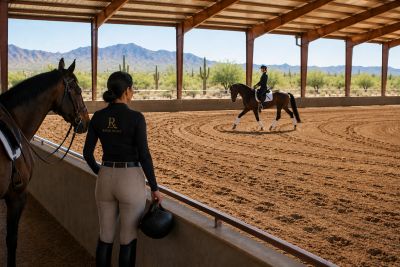
Learn Riderology™
The more we understand ourselves as riders, the more intentionally we can develop.
Riding gives us endless opportunities to learn.
About horses.
About movement.
About communication.
About training.
But Riderology™ asks us to include one more subject in that education: ourselves.
The resources here are designed to help you explore how riders think, learn, move, communicate, and develop—whether you're working through a particular riding problem or simply curious about becoming a more capable partner for your horse.
You don't need to start at the beginning.
Start with the question that brought you here.
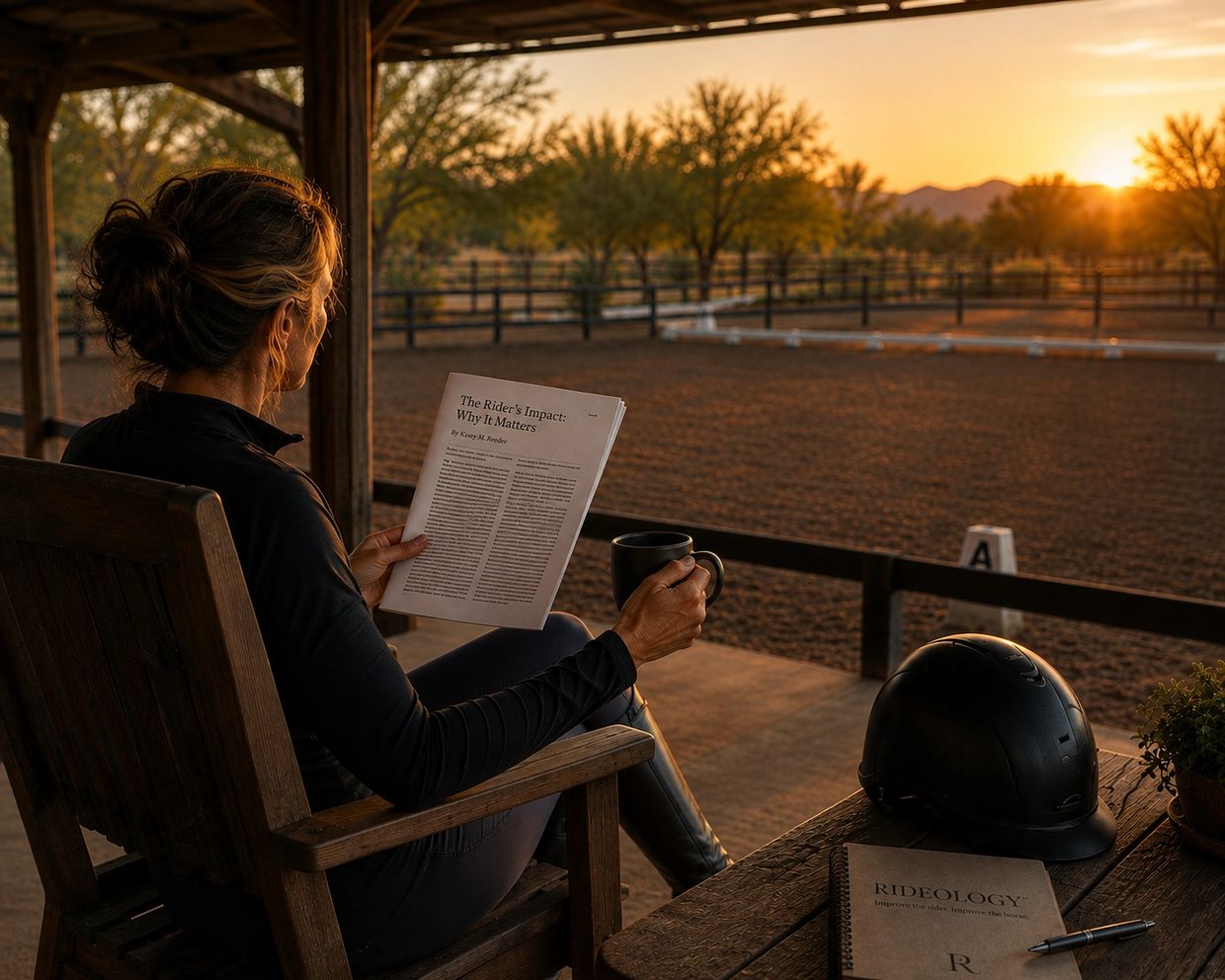
Riderology Articles
Ideas to help you think differently about the rider.
Riderology™ articles explore the questions, research, observations, and practical problems that arise throughout a lifetime of riding.
Some will help you understand the body.
Some will examine how riders learn.
Some will explore feel, communication, confidence, practice, or the horse-rider relationship.
And some may simply challenge an assumption we've carried into the saddle without ever stopping to question it.
Better questions can lead to better riding.

Courses & Masterclasses
Go deeper into one part of rider development.
Some subjects deserve more than an article.
Riderology™ courses and masterclasses are being developed to give riders the opportunity to explore specific topics in greater depth—from rider balance and biomechanics to following the motion, the seat, the aids, body awareness, learning, feel, and other aspects of rider development.
These resources will make it possible to study Riderology™ wherever you ride.
The Riderology™ Book
A complete framework for understanding the human being who rides.
Riderology™ is being written to bring the larger discipline of rider development together in one place.
The book explores how riders develop physically, mentally, emotionally, and technically—and how those dimensions come together within the horse-rider partnership.
It isn't a book about how to perform a particular discipline.
It is a book about the person who performs all of them.
The rider.
Learning Should Change What You Notice.
The purpose of Riderology™ education isn't simply to collect more information about riding.
It is to help you see differently.
To notice something you didn't notice before.
To understand why something may be happening.
To recognize your own patterns.
To ask better questions.
To experiment more thoughtfully.
And eventually, to become less dependent on someone else always telling you what to do next.
Because knowledge becomes most valuable when you can carry it back to the arena and use it to understand the horse, the ride, and yourself a little better.
Learn. Question. Experiment. Feel. Refine.
And then keep going.